Giving Beyond Borders: A Practical Guide to Evaluating International Nonprofits
Oct 09, 2026One of the greatest opportunities we have as donors is the ability to make a difference anywhere in the world. Whether it's providing clean water in Africa, funding education in Central America, supporting conservation in Australia, or helping families recover after a natural disaster, today's technology allows us to support causes far beyond our own communities.
But with that opportunity comes an important question:
How do you know an international nonprofit is legitimate?
When evaluating charities in the United States, donors have access to IRS Form 990 filings, Charity Navigator, Candid, and several other well-established resources. International nonprofits are different.
Every country has its own nonprofit laws, reporting requirements, and regulatory agencies. Financial statements may look different. Annual reporting standards vary. Some countries require extensive public disclosure, while others require very little. That doesn't mean you shouldn't give internationally. It simply means your due diligence needs to look a little different.
There Isn't One Global Charity Rating System
Many donors assume there's an international version of Charity Navigator.
There isn't.
No single score can capture the complexity of an organization's impact, governance, leadership, or effectiveness across hundreds of countries and legal systems. Instead of looking for one rating, look for multiple sources of evidence. The goal isn't to find a perfect charity; the goal is to become a more informed donor.
Start with Organizations That Perform Due Diligence
If you're looking for organizations working around the world, begin with platforms that perform their own vetting before introducing nonprofits to donors.
GlobalGiving
GlobalGiving is one of the most practical resources available for individual donors interested in international giving. Before organizations are accepted onto the platform, GlobalGiving reviews their legal status, governance, financial information, and organizational capacity.
While no screening process can guarantee future performance, GlobalGiving provides an excellent starting point for discovering established organizations that have already completed a meaningful level of due diligence.
Learn more: globalgiving.org
Verify That the Organization Is Legally Registered
One of the simplest, and most important, steps is confirming that the nonprofit is legally recognized in the country where it operates.
Many countries maintain searchable public charity registries, including:
- United Kingdom – Charity Commission
- Australia – Australian Charities and Not-for-profits Commission (ACNC)
- Canada – Canada Revenue Agency Charity Listings
- Ireland – Charities Regulator
- New Zealand – Charities Register
- Singapore – Commissioner of Charities
These registries often include:
- Registration status
- Annual filings
- Directors or trustees
- Governing documents
- Financial reports
- Contact information
If an organization cannot be found in its country's official registry, or cannot explain why, it deserves additional scrutiny.
For Larger Gifts, Use Institutional Resources
If you're making a significant international gift through a family foundation, donor-advised fund, or charitable trust, additional due diligence may be appropriate.
One of the most respected resources used by U.S. foundations is NGOsource.
NGOsource provides "equivalency determinations," allowing U.S. grantmakers to verify that a foreign nonprofit is substantially equivalent to a U.S. public charity for tax purposes. While most individual donors won't need this level of review, it's an excellent resource for larger gifts and institutional philanthropy.
The Council on Foundations also publishes country-specific guidance for international grantmaking, helping donors understand legal and tax considerations when supporting organizations around the world.
Ask for the Same Information You Would Expect Anywhere
One misconception about international nonprofits is that little information is available.
Often, that's not true.
Many organizations willingly provide annual reports, audited financial statements, strategic plans, impact reports, and governance information when asked.
Rather than focusing solely on financial ratios, ask questions such as:
- How does the organization define success?
- How do they measure results?
- Can they demonstrate measurable impact?
- Are leaders publicly identified?
- Do they publish annual reports?
- Are audited financial statements available?
- How are donations allocated?
- What challenges have they encountered, and how have they responded?
An organization's willingness to answer these questions often tells you as much as the answers themselves.
Look Beyond the Numbers
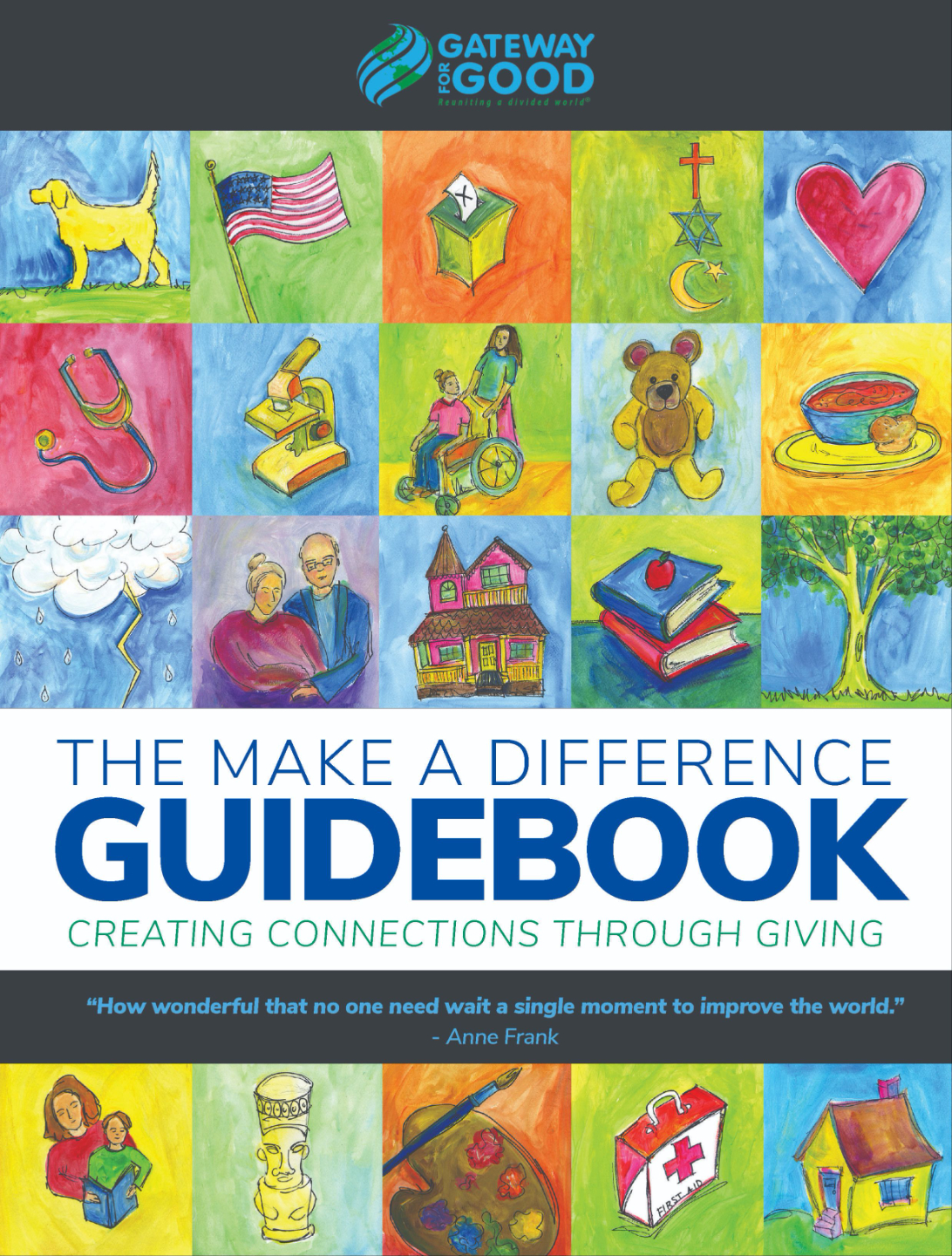
Throughout the Make a Difference Guidebook, we've emphasized that financial ratios alone rarely tell the whole story. That principle becomes even more important internationally. Accounting standards differ from country to country, expenses may be categorized differently, and administrative costs may appear higher or lower simply because reporting requirements vary.
Instead of asking,
"What percentage goes to overhead?"
Ask,
"Is this organization transparent?"
"Are they accomplishing meaningful work?"
"Can they demonstrate real outcomes?"
Those questions translate across every country.
Consider Local Leadership
One of the strongest indicators of a sustainable nonprofit is meaningful local involvement.
Consider asking:
- Does the organization employ local staff?
- Are local community leaders involved in decision-making?
- Do they partner with organizations already serving the community?
- Are programs designed with local input rather than imposed from the outside?
Organizations that invest in local leadership often create solutions that are more effective, culturally appropriate, and sustainable over the long term.
Research Their Reputation
Before making a significant gift, spend a few extra minutes learning about the organization.
Helpful sources include:
- News articles
- Academic research
- Independent evaluations
- Board member backgrounds
- Annual reports
- Independent audits
- Strategic plans
- Community partnerships
If the organization has a U.S.-based affiliate or "Friends of" organization, review its profile through one of the U.S.-based agencies as well. These organizations often provide additional financial transparency and publicly available information.
Giving During Disasters
Following natural disasters or humanitarian crises, emotions understandably run high. Unfortunately, emergencies can also create opportunities for fraudulent fundraising, many of which we've seen in the past. Whenever possible, consider organizations that already had staff, partnerships, and operations in the affected region before the crisis occurred. Existing infrastructure often allows aid to reach communities more quickly and efficiently than organizations created in response to a single event. As you might expect, they are also more likely to have governance and checks and balances in place that could take a stand-up, response-driven organization years to develop.
Additional Resources
Depending on the size and complexity of your gift, here's a summary of organizations that can provide valuable information.
GlobalGiving A vetted directory of international nonprofits working across hundreds of countries and causes. globalgiving.org
NGOsource Institutional due diligence and equivalency determinations for international grantmaking. ngosource.org
Candid Research U.S.-registered nonprofits and international organizations with U.S. affiliates. candid.org
ICNL Civic Freedom Monitor Country-by-country information about nonprofit laws, civic freedoms, and regulatory environments. Particularly helpful for donors supporting organizations in countries with changing legal or political conditions. icnl.org/resources/civic-freedom-monitor
National Charity Registries Many countries maintain official nonprofit registries that allow donors to verify legal status and review publicly available filings.
Thoughtful Giving Has No Borders
International giving doesn't require perfect information; it requires thoughtful evaluation. By combining independent research, government registries, organizational transparency, and a willingness to ask good questions, you can give with far greater confidence, whether the organization is across town or across the world.
At Gateway for Good, we believe generosity becomes even more meaningful when it is paired with wisdom. The goal isn't to become an expert on every nonprofit; it's to become the kind of donor who asks better questions.
Because better questions almost always lead to better giving.
Looking at an organization's numbers? Start with Beyond the Numbers: Analyzing Organizations.
Stay connected with news and updates!
Don't miss out on what's happening, sign up to be in the know!
We hate SPAM. We will never sell your information, for any reason.